
What Is Occupational Therapy?
- Irfana Azmeer
- Jul 25, 2025
- 2 min read

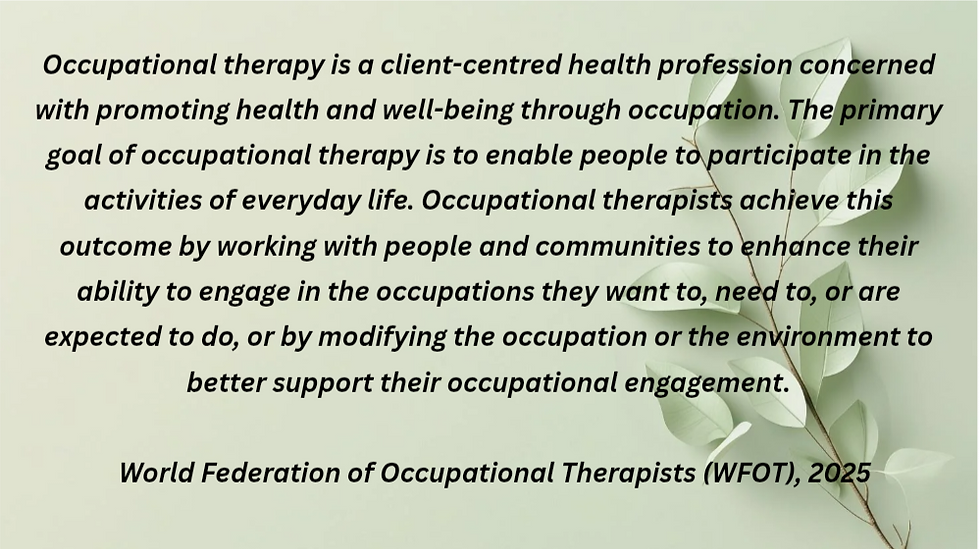
Occupational Therapy (OT) is a science-driven, evidence-based profession that helps people of all ages live life to its fullest by promoting health, preventing or living better with illness, injury, or disability.
At the heart of OT is occupation, the everyday activities that give life meaning. Whether it’s a child learning to play and socialize, an adult returning to work after an injury, or a senior managing memory loss, occupational therapy helps individuals participate fully and independently in the things they need, want, or are expected to do.
Occupational Therapy Helps People To
Build independence in daily living, school, work, and leisure
Recover skills after illness, injury, or developmental delay
Adapt tasks or environments to match abilities
Enhance participation in home, school, community, and society
Improve quality of life physically, emotionally, socially, and cognitively

Areas Covered in Occupational Therapy
Occupational therapists work in diverse environments and with a wide range of individuals and conditions, including:
Paediatrics: Autism, ADHD, developmental delays, sensory integration
Neurology: Stroke, traumatic brain injury, Parkinson’s, spinal cord injury
Geriatrics: Dementia, fall prevention, daily functioning, arthritis
Work & Industry: Vocational rehab, ergonomics, return-to-work programs
Mental Health: Anxiety, depression, schizophrenia, stress management
Community-Based Rehab (CBR): Inclusive services in rural and urban settings
Assistive Technology: Wheelchairs, adaptive devices, environmental modifications
Rehabilitation & Orthopaedics: Hand therapy, fractures, joint replacement
What Makes OT Unique?
Occupational therapy is not just about recovery - it’s about rediscovery. Unlike other professions that focus solely on body systems, OT views the individual holistically - connecting physical, cognitive, emotional, and social factors to meaningful daily life.
OT stands out by:
Using occupation as therapy -the client’s actual roles and routines
Creating client-centered goals, respecting each person's lifestyle, values, and environment
Bridging the gap between healthcare and daily life
Providing personalized, practical solutions to help people do what matters to them
Supporting long-term participation, not just short-term recovery

Why OT Matters More Than Ever
As populations age, childhood developmental conditions rise, and mental health challenges grow, OT provides practical, person-centered answers to everyday problems. From classrooms to hospitals, homes to workplaces, occupational therapists help people lead fuller, healthier, and more meaningful lives.

Written by:
Irfana Azmeer | Student Occupational Therapist.

Comments